
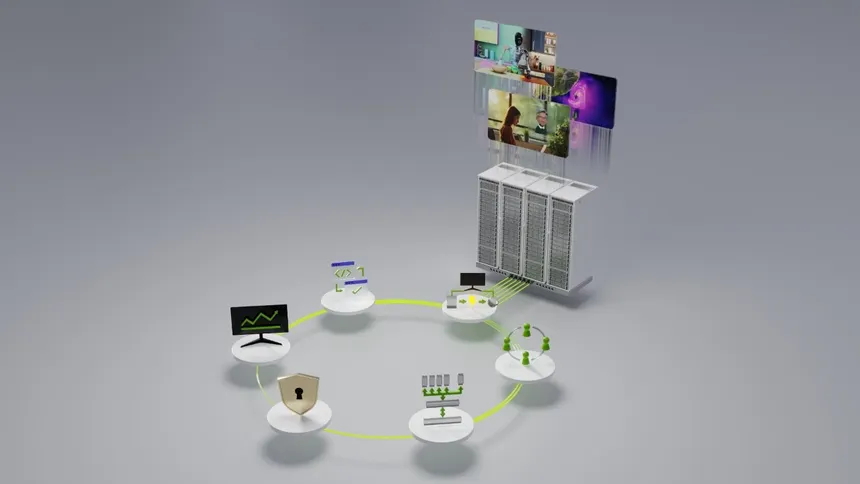
Edge AI is rapidly emerging as a transformative force in the world of technology. By bringing artificial intelligence directly to devices and sensors at the edge of networks, organizations are unlocking new possibilities for speed, privacy, and efficiency. In 2026, the rise of Edge AI is reshaping industries, enabling smarter operations, and driving innovation in ways that traditional cloud-based AI cannot match.
What Is Edge AI?
Edge AI refers to the deployment of AI algorithms and models on local devices, such as smartphones, cameras, industrial sensors, and autonomous vehicles, rather than relying solely on centralized cloud servers. This approach allows data to be processed and analyzed where it is generated, reducing the need for constant connectivity and minimizing latency.
Why Edge AI Is Gaining Momentum
Several factors are fueling the adoption of Edge AI. The explosion of Internet of Things devices has created vast amounts of data that need to be processed in real time. Sending all this data to the cloud for analysis is often impractical due to bandwidth limitations, privacy concerns, and the need for immediate decision-making. Edge AI addresses these challenges by enabling devices to interpret and act on data instantly, without waiting for instructions from a distant server.
Benefits of Edge AI for Enterprises
Edge AI offers significant advantages for businesses and organizations. Real-time processing enables faster responses in critical applications, such as autonomous vehicles, healthcare monitoring, and industrial automation. By keeping sensitive data on local devices, Edge AI enhances privacy and security, reducing the risk of data breaches and compliance violations.
Operational efficiency is another key benefit. Edge AI reduces the volume of data transmitted to the cloud, lowering bandwidth costs and easing network congestion. This distributed intelligence also increases system resilience, as devices can continue to function even if connectivity is lost.
Industry Applications and Use Cases
Edge AI is making a tangible impact across multiple sectors. In manufacturing, smart sensors equipped with AI detect equipment anomalies and predict maintenance needs, minimizing downtime and optimizing production. In retail, AI-powered cameras analyze customer behavior in real time, enabling personalized experiences and efficient store management.
Healthcare is another area where Edge AI is proving invaluable. Wearable devices and medical sensors can monitor patient vitals, detect irregularities, and alert caregivers instantly, all without sending sensitive health data to external servers. In transportation, Edge AI powers autonomous vehicles and smart traffic systems, improving safety and reducing congestion.
Challenges and Considerations
Despite its promise, Edge AI presents unique challenges. Deploying and managing AI models across thousands of distributed devices requires robust tools and frameworks. Ensuring consistent performance, security, and updates at the edge can be complex. Organizations must also address hardware limitations, as edge devices often have less processing power and storage than cloud servers.
Interoperability and standardization are ongoing concerns. As the ecosystem matures, industry collaboration and open standards will be essential to ensure seamless integration and scalability.
The Future of Edge AI
The future of Edge AI is bright. Advances in hardware, such as specialized AI chips and energy-efficient processors, are making it easier to run sophisticated models on small devices. Software platforms are evolving to simplify deployment, monitoring, and management of edge intelligence.
As 5G networks expand, the combination of high-speed connectivity and local AI processing will enable even more advanced applications, from augmented reality to smart cities. Organizations that invest in Edge AI today will be well-positioned to lead in a world where intelligence is everywhere.
Conclusion
The rise of Edge AI marks a new era in computing, where intelligence is distributed, responsive, and secure. By processing data at the source, organizations can unlock real-time insights, protect privacy, and drive operational excellence. As Edge AI continues to evolve, it will play a central role in shaping the future of technology and business, delivering smarter solutions for a connected world.